


Under the promotion of environmental protection policy, the application trend of biodegradable raw materials in disposable lunch boxes?
A materials revolution driven by policy, technology and markets is redefining the future of disposable lunch boxes in our hands.
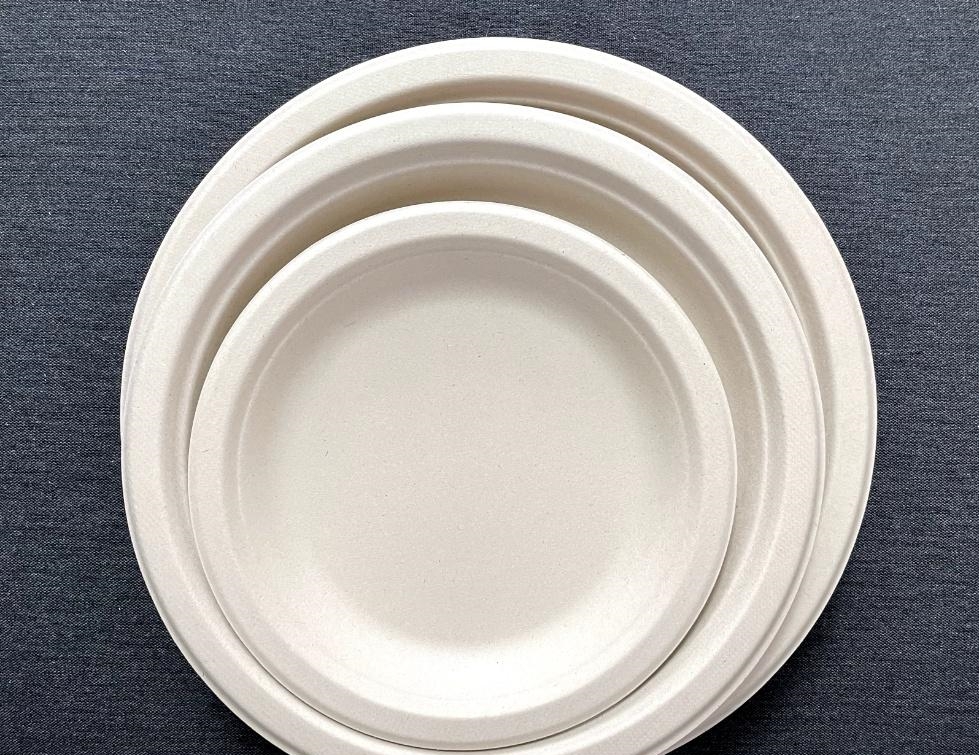
With the implementation of the Notice on Implementing Green Consumption Promotion Action jointly issued by nine departments of the state in early 2026, the promotion of the use of degradable lunch boxes has become an important part of the development of "green catering" and "green accommodation".
The disposable tableware market is facing unprecedented transformation pressure and opportunities. According to industry survey data, the global biodegradable disposable tableware market has reached about 13450 million US dollars in 2025.
The transition from traditional plastics to biodegradable materials is no longer a technological route choice, but a core issue related to the survival and development of the industry.
1.Policy thrust, environmental protection laws and regulations to build hard constraints on industrial upgrading
The whole chain deployment of green consumption at the national level is injecting strong impetus into the biodegradable materials industry. The green consumption promotion action implemented since 2026 clearly regards "promoting the use of degradable lunch boxes and packaging bags" as a decisive measure to promote green service consumption.
This policy signal means that the market access threshold for biodegradable disposable tableware will be further raised.
The circular issued by the Ministry of Commerce in conjunction with other departments not only stays at the advocacy level, but also defines 20 specific measures in seven aspects around the whole chain of green consumption. These systematic arrangements form a complete policy closed-loop from production to consumption, from recycling to reuse.
The Action Plan for Accelerating the Innovation and Development of Non-grain Bio-based Materials (2022-2025), issued jointly by the Ministry of Industry and Information Technology and other six departments, points out the direction for the bio-based materials industry from the perspective of technological innovation.
The introduction of key policies is promoting the comprehensive transformation of disposable tableware industry from traditional plastics to environmentally friendly materials.
The Ministry of Ecological Environment, the General Administration of Market Supervision and other departments have also strengthened plastic pollution control in their respective fields. Through the implementation of the "14th Five-Year Plan of Action for Plastic Pollution Control" and other documents, a multi-level and all-round policy network has been constructed.
The background of this intensive policy reflects the determination and strength of the state to control plastic pollution, and provides a clear policy expectation and a stable market environment for the biodegradable lunch box industry.
2.Material innovation, technological breakthrough from basic research to industrialization
The material innovation of biodegradable lunch boxes is going hand in hand along a number of technological routes. Protein-based films, as a new biodegradable material, are being highly concerned by the scientific research community.
A study funded by the Ministry of Agriculture of the United States has shown that the flexibility and structural stability of protein films can be significantly improved by adding phenolic compounds as biological plasticizers.
The breakthrough of this technology is to solve the problem that traditional glycerol plasticizers are easy to migrate from the protein matrix, thus enhancing the mechanical strength and durability of the film.
Another technical route comes from the research and application of seaweed extract, carrageenan. Carrageenan, as a natural polysaccharide, has good film-forming, biocompatibility and low-cost advantages, and is regarded as a potential material for the next generation of sustainable food packaging.
When the carrageenan is compounded with natural polymers such as starch, the water vapor permeability and mechanical strength of the film can be significantly improved.
Carrageenan-based packaging materials can not only achieve biodegradation, but also develop into "active packaging" by adding active ingredients (such as antioxidants, antimicrobials) to extend the shelf life of food.
In the field of bio-based synthetic materials, PHA (polyhydroxyalkanoate) has attracted much attention because of its excellent biodegradability and biocompatibility.
The bio-based PHA water-based barrier emulsion system developed by Dubaicheng New Material Technology Company has been successfully applied to paper-based food packaging, realizing the comprehensive barrier to water, oil and water vapor.
This innovation makes paper-based packaging no longer rely on traditional PE or PLA film, and provides a new path for the integrated optimization of "usable-recyclable-recyclable", marking the upgrade of "paper instead of plastic" from version 1.0 to version 2.0.
The following is a comparison of the technical characteristics of mainstream biodegradable materials:
Material Type | Primary Source | Technology Readiness | Key Advantages | Application Challenges |
PLA (Polylactic Acid) | Starch (corn, cassava, etc.) | Industrialization Stage | High transparency, good rigidity | Limited heat resistance, relatively brittle |
PHA Series | Microbial Fermentation | Early Commercialization | Biodegradable in marine & soil | Higher cost, narrow processing window |
Starch-Based Materials | Corn, potato, etc. | Widely Applied | Abundant feedstock, fully bio-based | Poor water resistance, low mechanical strength |
Protein-Based Films | Plant Protein | Laboratory R&D Stage | Edible, high barrier properties | Difficulties in large-scale production |
Carrageenan-Based Materials | Seaweed Extract | Industrial Exploration | Good film-forming, functional potential | High hydrophilicity, requires modification |
The market application of biodegradable disposable lunch boxes is showing the characteristics of rapid growth and structural transformation. The vigorous development of takeout and prepared dishes industry has become the core engine driving the growth of disposable tableware market.
Data show that the demand for disposable tableware in takeaway scenarios has accounted for more than 60% of the total market, and the market is still expanding.
With the tightening of environmental protection policies, downstream catering enterprises are speeding up the replacement of traditional plastic tableware, directly driving the growth of demand for environmentally friendly disposable tableware.
The double promotion of consumer health and environmental awareness has further promoted the transformation of the market to green. Post-epidemic era consumers'attention to dining hygiene, the demand for disposable tableware remained stable, while the popularity of environmental protection concept prompted consumers to choose more environmentally friendly products.
However, the high cost of environmentally friendly products is still a major obstacle to market promotion. The cost of degradable disposable tableware is significantly higher than that of traditional plastic tableware because of the high price of raw materials and the complex production process.
This cost difference makes it difficult for price-sensitive catering enterprises to replace in an all-round way, especially in the third and fourth-tier cities and county areas, the cost factor is more prominent.
The lack of performance and standard system also limits the depth and breadth of market application. Some degradable tableware has problems such as poor heat resistance and easy deformation, and the industry lacks a unified cross-category quality standard.
The product performance of different enterprises is uneven, some low-quality environmental protection tableware affects consumer experience, and the inconsistency of testing standards leads to confusion of product quality in the market.
The unstable supply of upstream raw materials further aggravates the volatility of the market, and the raw materials of environmentally friendly disposable tableware are greatly affected by the fluctuation of crop production and petrochemical product prices.
The uncertainty of the supply chain directly affects the stable production and cost control of the midstream production enterprises.
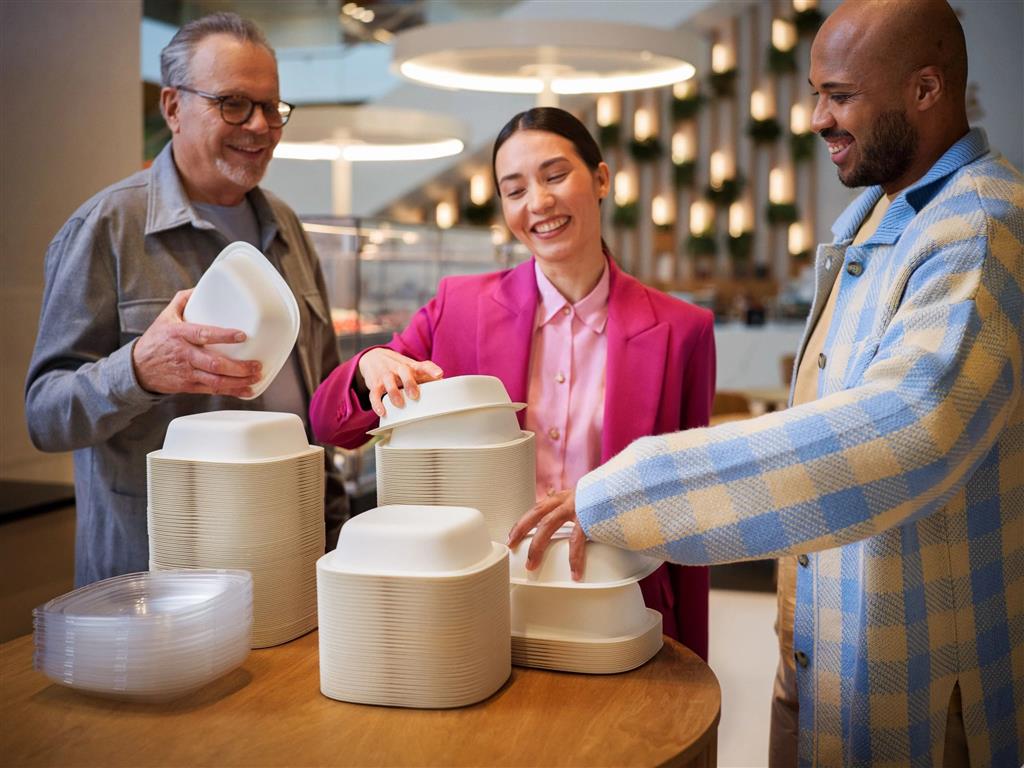
4.Industrial chain synergy, systematic upgrade from raw materials to recycling
The development of biodegradable lunch box industry has gone beyond the scope of single material or product innovation, and is evolving to the coordinated upgrading of the whole industry chain. Enterprises in all sectors of the industry are forming a coordinated promotion mechanism to cooperate around material innovation, process adaptation and recycling system construction.
On the material side, the company focuses on the formulation optimization of emulsion film-forming stability, barrier and medium resistance, while strengthening the management of raw materials, key indicators and batch consistency.
This standardized management from the source lays a foundation for the stability of product quality and improves the feasibility of large-scale industrialization.
The synergy at the process end is reflected in the joint verification of key parameters such as coating adaptation, drying window, coating uniformity and quality consistency.
Through cooperation, the upstream and downstream enterprises in the industrial chain have gradually formed a replicable process window and lowered the application threshold of new technologies. Especially in high-consumption scenarios such as paper cups, paper bowls and paper lunch boxes, enterprises carry out scale-up tests under sample-pilot-production line conditions around the requirements of food contact safety, sensory and heat and oil resistance.
The improvement of recycling and disposal system is the key link to determine whether the biodegradable lunch box can really realize its environmental value.
At present, the garbage classification and recycling system in some areas is not perfect, and it is difficult to achieve effective degradation by mixing environmental protection tableware with other garbage. More importantly, many tableware advertised as degradable need specific composting conditions to be completely degraded, while the coverage of corresponding composting facilities in China is low.
The implementation of the national standard GB/T 46256 2025 "Requirements for Biobased Content and Traceability Identification of Biobased Materials and Products" provides a traceability framework for the industrial chain from raw materials to products.
The standard requires that product identification must include four information: material, product standard number, product name and measured value of bio-based content, which provides a clear basis for market supervision and consumer choice.
This labeling system not only helps to regulate the market, but also improves the public's awareness and acceptance of degradable materials, thus promoting the popularization of the concept of green consumption.
With the formal implementation of the new national standard for bio-based materials and products on March 1, 2026, the "bio-based content XX%" label on disposable lunch boxes will become the new normal of green consumption.
The market is no longer satisfied with the concept of "degradable", but is increasingly concerned about the conditions of degradation, the time and the exact impact on the environment. The future form of disposable lunch box will be a diversified solution shaped by policy, technology and market, and each material will find its own position in specific application scenarios.